News & Insights
News
Middle East Automotive Market: Growing Opportunities for China Car Export
Middle East Automotive Market: Growing Opportunities for China Car Export
News
2026-11-20
Sieton Auto Editorial
Over the past two years, the Middle East Automotive Market has emerged as one of the most dynamic growth markets for Chinese automotive exports. As local consumer acceptance of Chinese brands continues to rise, stakeholders across the industry—including vehicle manufacturers, authorized dealerships, and automotive supply chain traders—are accelerating their expansion into the region. However, succeeding […]
Over the past two years, the Middle East Automotive Market has emerged as one of the most dynamic growth markets for Chinese automotive exports. As local consumer acceptance of Chinese brands continues to rise, stakeholders across the industry—including vehicle manufacturers, authorized dealerships, and automotive supply chain traders—are accelerating their expansion into the region.
However, succeeding in the Middle East Automotive Market requires far more than offering a competitive ex-factory price. With strict vehicle import regulations and complex cross-border logistics, suppliers who consistently secure long-term orders are typically those who understand local market requirements, accurately calculate total export and delivery costs, and demonstrate reliable vehicle supply and delivery capabilities.
1. Growing Demand for Chinese Vehicles in the Middle East
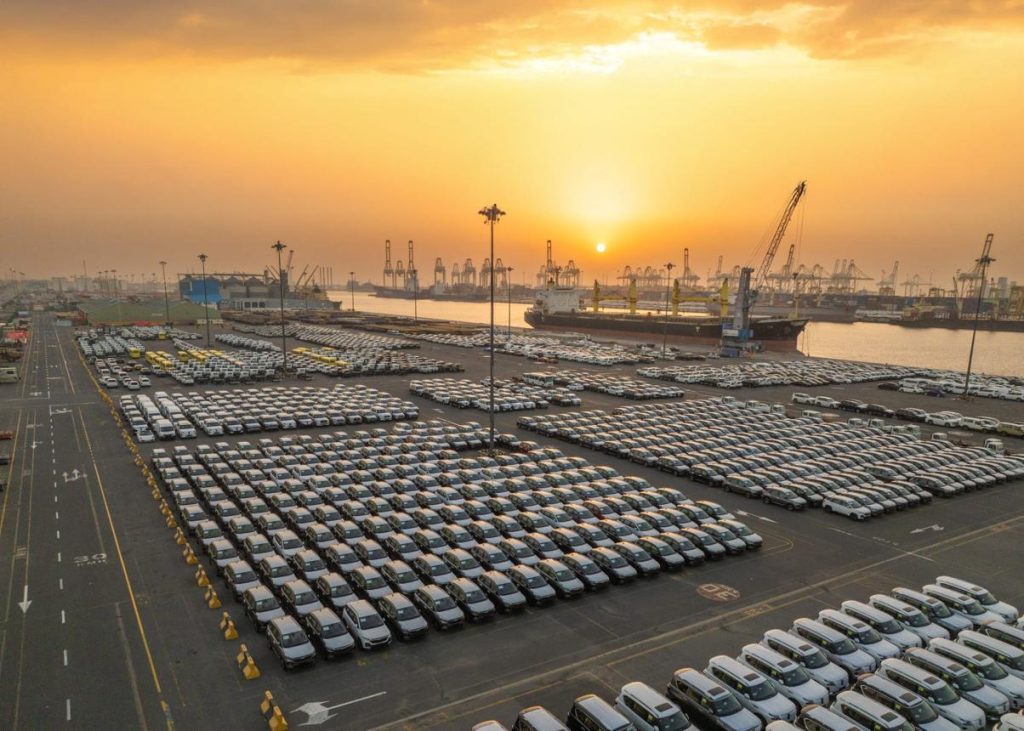
Saudi Arabia, the United Arab Emirates, Oman and Qatar are among the key automotive markets in the region. Saudi Arabia and the UAE, in particular, are important destinations for Chinese vehicle exports.
SUVs, pickup trucks and mid-size to large passenger vehicles remain popular choices among local buyers. Consumers generally pay close attention to vehicle space, engine performance, comfort and durability, especially under high-temperature driving conditions.
Chinese brands are gaining greater visibility in these markets, supported by competitive pricing, modern designs and a wide range of vehicle configurations.
New energy vehicles are also attracting attention. Electric and plug-in hybrid models are gradually entering the market, particularly in countries such as the UAE and Saudi Arabia. However, differences in charging infrastructure, consumer preferences and government policies mean that demand for conventional fuel vehicles, hybrids and electric vehicles will continue to coexist.
For Chinese suppliers, this creates opportunities across multiple vehicle categories rather than relying on a single popular model.
2. Import Regulations: Compliance Is Essential
Automotive import requirements vary across Middle Eastern countries. Vehicle age, emission standards, technical specifications and certification documents can all affect whether a vehicle is eligible for import.
Saudi Arabia, for example, has specific requirements concerning vehicle age, energy efficiency and technical compliance. Certain imported used vehicles are also subject to additional restrictions and fees.
The UAE continues to update its vehicle standards and conformity requirements. From January 1, 2026, new vehicle models imported into the UAE are subject to updated emission requirements, including standards equivalent to at least Euro 6b. Electric vehicles are also subject to applicable local conformity requirements.
For Chinese suppliers, this means that vehicle specifications and documentation must be checked before an export order is confirmed. Production dates, model versions, VIN information and technical documents should be accurate and consistent.
A vehicle that is competitively priced in China may not necessarily be suitable for every overseas market. Understanding destination-country requirements in advance helps reduce potential compliance issues and unnecessary costs.
3.Pricing in the Middle East Automotive Market: Looking Beyond Vehicle Purchase Costs
Price remains a powerful competitive factor in the Middle East Automotive Market; however, today’s overseas buyers have become increasingly sophisticated. When evaluating procurement costs, they focus on the total landed cost—the overall expense incurred before a vehicle is cleared through customs and registered for use in the destination country.
Beyond the vehicle purchase price, the total vehicle import costs include domestic port handling and customs declaration fees, ocean freight and insurance, destination port charges, import duties, and local value-added tax (VAT). Taking Saudi Arabia as an example, the Gulf Cooperation Council (GCC) generally applies a 5% common external tariff to many imported goods. However, the actual customs duty for vehicles depends on the applicable HS code and relevant customs classification, while VAT and other local charges must also be considered.
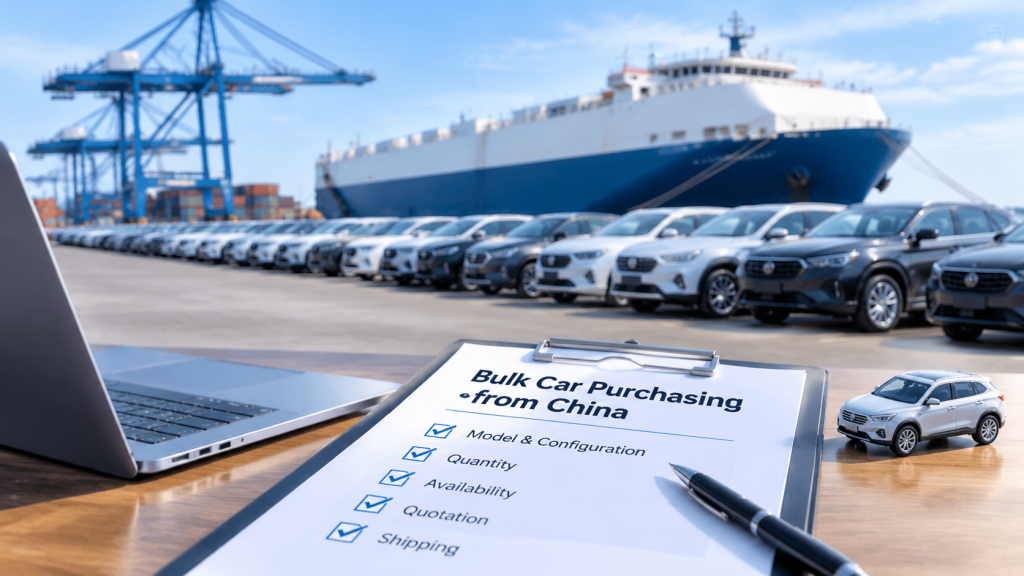
For Chinese automotive suppliers looking to develop business in the Middle East, clear and transparent quotations are essential. Establishing agreed trade terms, such as FOB or CIF, confirming delivery timelines, and providing detailed vehicle specifications are more effective ways to build buyer confidence than simply offering an artificially low base price. For overseas distributors placing bulk orders, a reliable supply schedule and sustainable automotive export pricing are often more valuable than a one-time price reduction.
4. What Do Overseas Buyers Expect from Chinese Suppliers?
As demand in the Middle East becomes more diversified, overseas buyers are paying greater attention to the reliability of their Chinese supply partners.
First, suppliers need to provide vehicles that match actual market demand. SUVs, sedans, pickup trucks and selected new energy models may all offer opportunities, but product selection should be based on the purchasing requirements of each destination market.
Second, accurate vehicle information is essential. Suppliers should clearly provide production dates, specifications, available configurations, exterior colors, left-hand or right-hand drive status and actual stock availability.
Third, bulk supply capability matters. Overseas dealers often look for suppliers who can support repeat orders, offer reasonable wholesale pricing and maintain consistent vehicle resources.
Finally, cooperation should extend beyond vehicle procurement. Export documentation, vehicle preparation, loading arrangements and international transportation all play a role in completing an export order successfully.
Suppliers who can coordinate effectively with export trading companies are better positioned to develop long-term overseas business relationships.
5. Building Long-Term Cooperation with Chinese Automotive Suppliers
The Middle East remains a promising market for China’s automotive export industry. However, market opportunities do not automatically translate into successful sales. Competitive pricing, suitable vehicle models, regulatory compliance and reliable supply must work together.
As an automotive export trading company, Sieton Auto continues to develop vehicle sourcing channels and overseas business opportunities across the Middle East and other international markets.
Through partnerships with Chinese automotive brands and authorized dealerships, we provide overseas buyers with vehicle sourcing, export documentation, international logistics and vehicle delivery services.
Sieton Auto welcome cooperation with Chinese vehicle manufacturers, authorized dealers and qualified automotive suppliers. By combining reliable vehicle resources, competitive wholesale pricing and efficient business coordination, we aim to bring more Chinese vehicles to international markets and build sustainable partnerships with suppliers worldwide.
Online · replies within minutes
Hi there! Need help finding a vehicle or getting a quote? Chat with our team on WhatsApp.
+86 131 2070 2093