الأخبار والرؤى
الأخبار
How Much Does It Cost to Ship a Car from China? 2026 Rates Guide
How Much Does It Cost to Ship a Car from China? 2026 Rates Guide
الأخبار
2026-11-20
افتتاحية سيتون أوتو
How Much Does It Cost to Import Cars from China? A Comprehensive Breakdown of Landed Costs Importing vehicles from China offers a wide range of sourcing options for overseas automotive dealers, wholesalers, and distributors. China has emerged as a major global supplier of vehicles, with exports spanning new energy vehicles (NEVs), internal combustion engine (ICE) […]
How Much Does It Cost to Import Cars from China? A Comprehensive Breakdown of Landed Costs
Importing vehicles from China offers a wide range of sourcing options for overseas automotive dealers, wholesalers, and distributors. China has emerged as a major global supplier of vehicles, with exports spanning new energy vehicles (NEVs), internal combustion engine (ICE) vehicles, hybrids, and used cars.
However, the cost of importing vehicles extends well beyond the purchase price of the cars themselves.
Before placing an order, importers must also account for international ocean freight, transport insurance, import duties, taxes, destination port charges, customs clearance fees, and inland transportation costs. Choosing the wrong shipping method or overlooking local import regulations can significantly impact your total procurement costs and profit margins.
Prepared by Sieton Auto, this article explains how to calculate the landed cost of importing vehicles from China, how to compare various shipping methods, and how to avoid common cost-related pitfalls during the international vehicle transport process.
What Actually Determines Your Shipping Cost
Five variables drive almost all of the variation:
1. Shipping method. Container, RoRo (roll-on/roll-off) and breakbulk have completely different cost structures. Container pricing is per box, so two cars in one 40HQ halves the per-unit freight. RoRo pricing is per vehicle, so it does not reward consolidation the same way.
2. Route and destination port. Freight is priced by lane and by port. Lagos costs multiples of Jebel Ali from the same origin. Port congestion, transhipment requirements and seasonal surcharges all feed into the number.
3. Vehicle size and weight. A compact hatchback and a full-size SUV do not occupy the same space. In a 40HQ, two large SUVs is the practical limit; with racking systems some operators load three or four smaller vehicles, but racking is not available on every lane and adds handling risk.
4. Season. Rates rise ahead of major holidays, during peak export periods, and whenever a carrier alliance adjusts capacity. Booking four to six weeks ahead is usually cheaper than booking two weeks ahead.
5. Incoterm. FOB, CIF and DDP are three different products with three different price points and three different risk profiles. Choosing between them is a business decision, not a purchasing preference — see the section below.
Shipping Methods Compared
40HQ container (high-cube)
The default for one to two vehicles. Internal length around 12 metres, which comfortably takes two mid-size SUVs or one large SUV plus one sedan. Your vehicles are not handled by stevedores, they are not exposed to weather in transit, and you can load parts, tyres or a starter spares kit into the remaining space at no extra freight cost.
Best for: one or two vehicles, mixed orders, buyers shipping parts alongside, high-value or premium units.
Watch out for: loading quality. A vehicle that is not properly chocked and strapped will move inside the container in heavy weather. Insist on photographic evidence of the bracing before the doors are closed.
RoRo (roll-on/roll-off)
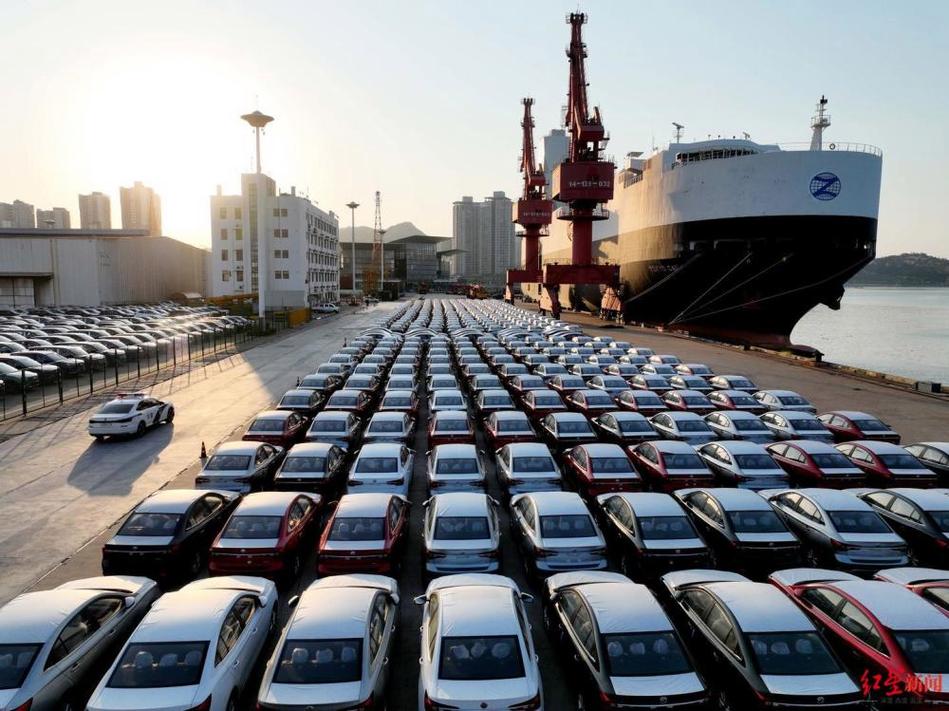
Vehicles are driven onto a specialised vessel and parked. Pricing is per unit, and per-unit cost is typically 30–55% lower than a container when you are shipping two or more vehicles.
Best for: three or more vehicles, standard-size units, cost-sensitive volume shipments.
Watch out for: sailing frequency. RoRo services do not call at every port and may run monthly rather than weekly on thinner lanes. Also, many RoRo operators restrict or refuse vehicles with installed lithium-ion batteries, which rules the method out for most EV shipments.
Breakbulk and flat-rack
Used for oversized, non-running or damaged vehicles, and for ports with no RoRo service. Expensive and slow, but sometimes the only option.
Air freight
Not economically viable for whole vehicles except in emergencies or for prototypes. Occasionally used for urgent parts.
Indicative 2026 Rate Ranges by Destination
The table below shows planning ranges for a 40HQ container and, where the lane supports it, per-unit RoRo. All figures in USD, excluding destination charges, duty and inland haulage.
| Destination port | 40HQ container | RoRo per vehicle | Transit time |
|---|---|---|---|
| Jebel Ali, UAE | 1,200 – 2,300 | 550 – 950 | 18–25 days |
| Dammam, Saudi Arabia | 1,500 – 2,700 | 700 – 1,200 | 20–28 days |
| Karachi, Pakistan | 1,500 – 2,900 | 700 – 1,300 | 18–26 days |
| Port Klang, Malaysia | 700 – 1,500 | 350 – 650 | 8–14 days |
| Manila, Philippines | 1,200 – 2,300 | 550 – 1,000 | 10–16 days |
| Lagos (Apapa / Tin Can), Nigeria | 4,500 – 7,500 | 1,400 – 2,400 | 35–50 days |
| Tema, Ghana | 4,200 – 6,800 | 1,300 – 2,300 | 33–45 days |
| Mombasa, Kenya | 3,000 – 5,200 | 950 – 1,700 | 28–38 days |
| Dar es Salaam, Tanzania | 3,200 – 5,400 | 1,000 – 1,800 | 30–40 days |
| Santos, Brazil | 4,000 – 7,000 | Not routinely available | 35–48 days |
| San Antonio, Chile | 3,800 – 6,500 | 1,200 – 2,100 | 32–42 days |
| Callao, Peru | 3,500 – 6,000 | 1,100 – 1,900 | 30–40 days |
Two things to notice. First, the West Africa and South America lanes cost three to five times the Gulf lanes for the same container — freight is not a fixed percentage of vehicle value, so a landed-cost model built on one market will be badly wrong in another. Second, RoRo is not offered on every lane; where a port has no RoRo service, container is the only option regardless of cost.
FOB vs CIF vs DDP — Which Should You Choose?
- FOB (Free On Board)
Under FOB terms, the seller is responsible for transporting the goods to the agreed-upon port of shipment and completing the loading process onto the vessel.
Once the vehicles are loaded onto the ship, the risk of loss or damage to the goods transfers to the buyer. From that point forward, the primary ocean freight costs and insurance are arranged and covered by the buyer.
Advantages:
The buyer has the flexibility to select their own shipping line and freight forwarder.
Ocean freight costs are more transparent.
It is easier to negotiate freight rates directly with a freight forwarder.
Well-suited for importers with established logistics and customs clearance channels.
Disadvantages:
The buyer must personally arrange international transport and insurance.
Requires coordination between the supplier, the freight forwarder, and agents at the port of destination.
Requires a certain level of knowledge regarding international trade and shipping processes.
For automotive importers who already have reliable freight forwarding and customs clearance resources, FOB is generally a flexible option.
If shipping via container, it may also be worth discussing FCA (Free Carrier) terms with the supplier; depending on where the container is actually handed over to the carrier, FCA can sometimes be more appropriate than FOB.
- CIF (Cost, Insurance, and Freight)
Under CIF terms, the seller is responsible for arranging and paying for the ocean freight to the designated port of destination, as well as purchasing the minimum required transport insurance for the goods.
However, it is crucial to note that while the seller covers the freight and insurance costs, the risk of loss or damage to the goods transfers to the buyer at the moment they are loaded onto the vessel at the port of shipment—not upon arrival at the destination port.
Advantages:
The buyer does not need to independently arrange the primary ocean freight leg.
It is easier to compare quotes from different suppliers.
Particularly convenient for buyers importing vehicles from China for the first time.
Disadvantages:
The buyer may not have a clear understanding of the actual ocean freight costs.
Costs incurred at the destination port and import duties/taxes are typically not included in the quote.
The buyer remains responsible for customs clearance and inland transportation at the destination.
The insurance provided under CIF may not necessarily cover all the transport risks the buyer wishes to mitigate.
If a buyer prefers the supplier to handle the primary ocean freight but already has their own established channels for local customs clearance, CIF is an option worth considering. 3. DDP (Delivered Duty Paid)
DDP means that the seller is responsible for arranging transportation, export clearance, import clearance, and the payment of applicable import duties and taxes, and for delivering the goods to a destination agreed upon by both parties.
For buyers who lack local customs clearance and logistics resources, this arrangement can reduce the coordination required during the procurement process.
Advantages:
Most import-related steps are covered by a single, agreed-upon delivery price.
The buyer has fewer logistics-related tasks to coordinate.
Under DDP terms, the seller assumes responsibility for import clearance and the payment of applicable taxes and duties.
Suitable for buyers who prefer a comprehensive, end-to-end delivery solution.
Disadvantages:
The quoted price is typically higher.
The buyer has less direct control over logistics arrangements.
The seller must have the capability to legally complete import formalities in the destination country.
Some countries impose specific restrictions regarding who can act as an importer, as well as requirements for import licenses and vehicle registration.
Before opting for DDP, both the buyer and the seller must verify that the seller is legally authorized to handle import formalities in the destination country.
This is particularly important in the vehicle export business, as vehicle registration, import permits, and local compliance requirements may involve additional procedures.
The trap: a supplier quoting an unusually low CIF or DDP price is often recovering margin elsewhere, or has under-declared the customs value. Under-declaration is not a clever saving — it is the single most common cause of vehicles being held, fined or re-valued at destination, with demurrage accruing daily while the dispute is resolved. The paperwork side is covered step by step in the export declaration process.
The Costs Nobody Quotes You
Budget for these before you compute your margin:
- If you work with an established freight forwarder and wish to have greater control over shipping costs, you may opt for FOB.
- If you prefer for the supplier to handle the arrangements for ocean freight, you may choose CIF.
- If you require a more comprehensive delivery service—and the supplier is legally capable of completing import formalities in the destination country—you might consider DDP.
- When entering into a contract, ensure that the specific port or delivery location, as well as the applicable version of the Incoterms, are clearly defined. Incoterms primarily delineate responsibilities, costs, and risks; they do not serve as a substitute for a complete sales contract.
A Worked Example
Two mid-size SUVs, FOB Shanghai, destination Lagos, shipped in one 40HQ.
| Line item | Estimate (USD) |
|---|---|
| Ocean freight, 40HQ China → Lagos | 5,500 |
| Marine insurance (~0.4% of CIF) | 180 |
| Export documentation, CO, inspection | 250 |
| Destination terminal and port charges | 600 |
| Clearing agent | 450 |
| Import duty (illustrative 20%) | *depends on customs value* |
| VAT (illustrative 15% on duty-inclusive value) | *depends on customs value* |
| Levies | *depends on HS code* |
| Inland haulage to final city | 400 – 900 |
| Contingency (10%) | 800 |
Notice that the fixed logistics cost — freight, insurance, documentation, port, agent, inland — lands around USD 8,000 for the container, or roughly USD 4,000 per vehicle before duty is applied. On a USD 20,000 vehicle that is a 20% logistics load. On a USD 8,000 vehicle it is 50%. This is why cheap cars are hard to export profitably to distant markets and mid-value SUVs are the sweet spot.
Five Ways to Reduce Landed Cost
- Load two vehicles per container. The single largest saving available to a small importer. Per-unit freight drops by roughly 40%.
- Consolidate. If you are buying across several brands or suppliers, ship them together. We consolidate multi-brand orders into one container as standard.
- Use RoRo for volume. Above three vehicles on a lane with RoRo service, per-unit cost usually falls below container.
- Book early. Four to six weeks ahead is consistently cheaper than spot booking two weeks out.
- Negotiate the destination side. Port charges and clearing fees are not fixed — get two or three quotes and check what is actually included.
الأسئلة الشائعة
Q1: How much does it cost to ship a car from China to Nigeria?
The exact cost depends on the vehicle’s dimensions, the shipping method, the ports of departure and arrival, and current ocean freight rates.
As a rough budget estimate, shipping a single car via a Ro-Ro (roll-on/roll-off) vessel might cost between $1,400 and $2,400, while shipping it in a 40-foot high-cube container could range from $4,500 to $7,500.
These figures are for reference only and do not constitute real-time shipping quotes. They also exclude import duties at the destination, miscellaneous port charges, and inland transportation costs.
For an accurate quote, please provide the specific vehicle model, quantity, and destination port.
Q2: Which is cheaper: container shipping or Ro-Ro shipping for cars?
For a single vehicle, Ro-Ro shipping is often more economical, provided there is a suitable route available.
For multiple vehicles, container shipping can be cost-effective on a per-vehicle basis if the space is utilized efficiently—for example, by fitting two appropriately sized vehicles into a single 40-foot high-cube container.
The final decision should be based on a comparison of the total shipping costs and available route options.
Q3: How many SUVs can fit into a 40-foot container?
In many loading configurations, a 40-foot high-cube container can accommodate two SUVs of suitable dimensions.
However, the actual number depends on the vehicle’s dimensions (length, width, and height), the dimensions of the container door opening, the loading/unloading equipment used, and the requirements for securing the vehicles.
You should confirm the specific loading plan with your shipping service provider before booking.
Q4: What is the difference between FOB and CIF when importing cars from China?
Under FOB (Free On Board) terms, the buyer is responsible for arranging and paying for the main ocean freight and insurance.
Under CIF (Cost, Insurance, and Freight) terms, the seller is responsible for paying the ocean freight and arranging for minimum insurance coverage as required by CIF, up to the agreed-upon port of destination.
It is important to note that under both terms, the risk of loss or damage to the cargo typically transfers to the buyer once the goods are loaded onto the vessel at the port of departure.
Q5: Is it cheaper to import new energy vehicles (NEVs) from China compared to internal combustion engine (ICE) vehicles?
Not necessarily. Some countries offer lower import tariffs, tax incentives, or other policy support for new energy vehicles (NEVs). Conversely, some nations may impose additional fees or set specific technical standards for batteries and the vehicles themselves.
It is advisable to verify the latest policies of the destination country before making a purchase.
Q6: What documents are required for importing vehicles from China?
Common export and shipping documents include:
Commercial Invoice.
Packing List (where applicable).
Bill of Lading.
Export customs declaration documents.
Certificate of Origin (where applicable).
Vehicle identification and technical specification documents.
Relevant inspection or conformity certification documents (where applicable).
Specific documentation requirements depend on the destination country and the vehicle category. We recommend consulting with local customs authorities or a licensed customs broker.
Q7: Is it possible to calculate the total landed cost of a vehicle before placing an order?
Yes.
Importers can perform a preliminary landed cost estimate before placing an order.
To ensure greater accuracy, you will need to provide details such as the specific vehicle model, purchase quantity, destination country, port of destination, and the intended mode of transport.
Subsequently, a professional customs broker in the destination country should verify the specific import tariffs and local taxes.
Choose Sieton Auto to Begin Your Vehicle Sourcing Journey from China
Selecting the right vehicle supplier is only one part of a successful vehicle import business. It is equally important to understand international shipping, export documentation, and the market requirements of the destination country.
Sieton Auto is a China-based vehicle export supplier, providing sourcing and export solutions for overseas B2B buyers.
Our vehicle offerings include:
New energy passenger vehicles.
Used vehicles.
Battery electric vehicles (BEVs) and hybrid vehicles.
SUVs and sedans.
Commercial vehicles and buses.
We cater to overseas automotive dealers, distributors, and wholesale buyers, offering vehicle supply and export logistics support tailored to specific market needs and procurement requirements.
Ready to price your own route? Request a freight-inclusive quote with your destination port and vehicle list, and we will confirm the current rate within 24 hours.
متصل · يرد خلال دقائق
مرحباً! هل تحتاج مساعدة في العثور على سيارة أو الحصول على عرض سعر؟ تحدث مع فريقنا على واتساب.
+86 131 2070 2093